

Long WhatsApp voice notes are fast to send and slow to replay — especially in meetings, noisy places, or when you need a quote in writing. Searching for a way to transcribe WhatsApp voice notes usually means one of three jobs: get the words as text, skim a summary, or translate what someone said.
Shmooz is an AI assistant inside WhatsApp. You forward a voice note into the Shmooz chat and ask for a transcript. No desktop app, no separate recorder — the reply comes back in the same conversation.
Why transcribe voice notes inside WhatsApp
- Read instead of replaying long audio when you cannot listen out loud
- Search and copy names, addresses, and action items
- Summarize a 2-minute note into three bullets
- Translate a voice note into another language after you have the text

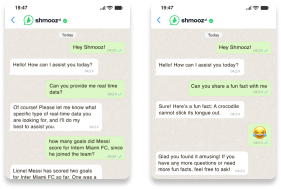
Transcribe voice notes on WhatsApp
Forward a voice note to Shmooz and get a clear text transcript — then summarize or translate it in the same chat.
How to convert a WhatsApp voice note to text with Shmooz
- Tap Open Shmooz on WhatsApp and save the chat.
- Open the chat that has the voice note → tap Forward → choose Shmooz.
- Send a short instruction, for example: “Transcribe this voice note” or “Transcript + 3-bullet summary”.
- Use the text reply: copy it, ask for a clearer rewrite, or translate the voice note in one step.
Tips for cleaner transcripts
- Forward the original voice note (not a re-recorded clip of your phone speaker)
- Say the language if it is not obvious: “Transcribe in English” / “Transcribe in Hebrew”
- Ask for speaker labels only when the note clearly switches people
- For privacy listening first, see our guide on listening without blue ticks — transcription is a separate step after you have the audio in Shmooz
What else you can do after the transcript
Once the words are in chat, Shmooz can turn them into a reply draft, a to-do list, or a polished message. Need transcript and translation together? See translate WhatsApp voice notes. For ChatGPT-style help in the same thread, start with free ChatGPT on WhatsApp.
Transcribe voice notes on WhatsApp
Forward a voice note to Shmooz and get a clear text transcript — then summarize or translate it in the same chat.
FAQ: WhatsApp voice note transcription
Can WhatsApp transcribe voice messages by itself?
WhatsApp’s built-in options vary by device and region. Many people still want a reliable chat workflow: forward → transcript → summary. Shmooz is built for that inside WhatsApp.
Does this work on Android and iPhone?
Yes. Forwarding a voice note works the same way on both. Open Shmooz from WhatsApp and keep the conversation in one chat.
Is this the same as listening without blue ticks?
No. Blue-tick privacy is about when a message is marked read. Transcription is about turning audio into text so you can read, search, and act on it. Whether the sender gets a separate “you transcribed this” receipt is can someone see if you transcribe a voice note. Trimming the audio file is can you edit a WhatsApp voice note. This page stays the how-to.
Start now
Forward one real voice note today and ask for a transcript — that is the fastest test.

ALL Systems Operational